
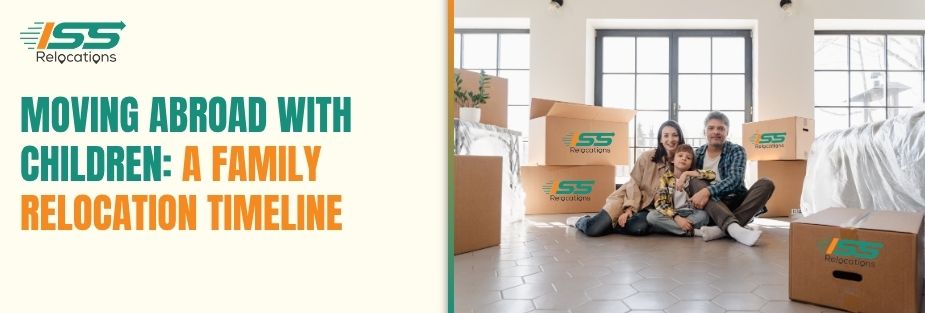
Moving Abroad with Children: A Family Relocation Timeline
Moving abroad with children becomes far more manageable when your family has a clear relocation timeline rather than a single stressful moving date. The decisions you make about schools, housing, documents, belongings and daily routines need to happen in the right order.
A well-planned international move gives children more predictability and gives parents time to resolve practical issues before they become urgent.
This guide explains what to do at each stage, how to create a useful moving inventory list, what to keep in your international moving checklist and where international movers or corporate relocation services can provide valuable support.
Moving Abroad With Children: Start With the Right Timeline
A family move is not simply a larger household shipment. It is a change to your children’s school year, friendships, sleep patterns, travel arrangements and sense of security.
The physical move is only one part of the relocation; the timing of the surrounding decisions often determines how smoothly the transition feels.
In our experience managing international relocations, families usually experience the most avoidable pressure when they start with packing instead of planning. Packing is important, but it should follow decisions about what the family is taking, where it will go, when it will be needed and which items must travel separately.
Build the timeline around fixed dates
When discussing moving abroad with children, start by writing down every date that cannot easily change. These may include employment start dates, visa or residence appointments, school terms, lease expiry, property handover, flights and temporary accommodation bookings.
Requirements and deadlines vary by country and personal circumstances, so official immigration, school and destination information should always be checked for your specific move.
Then work backwards from the departure date. Allow time for decisions, quotations, inventory preparation, packing, shipment collection, travel and arrival arrangements. Do not assume that the day your belongings are collected is the day you leave.
Many families need an essentials plan for the period between packing and departure, as well as for the time before the main shipment arrives.
Use one family planning system
Before moving abroad with children, keep your international moving checklist, document tracker, school information, quotations, inventory and contact details in one shared system. A simple spreadsheet or folder can work well if both adults know where the latest version is stored.
Useful categories include:
- Family and travel documents
- School, housing and healthcare tasks
- Shipment, packing and storage decisions
- Arrival arrangements and first-week essentials
For a corporate transfer, connect this family plan to the employer’s relocation programme. Corporate relocation services may help coordinate household goods, temporary accommodation, destination guidance and communication between the employee, employer and moving provider.
Clarify who is responsible for each task rather than assuming that every part of the move is included.
Six to Nine Months Before Moving Day
This is the strategic stage. When moving abroad with children, you may not yet know every packing detail, but you can make the decisions that affect cost, timing and family stability. Starting early also gives you options if school places, housing choices or official documents take longer than expected.
Confirm the destination and family priorities
Before discussing every detail with children, agree on the practical priorities as adults. Consider the preferred neighbourhood, school location, commute, access to healthcare, language needs, climate, family support and proximity to daily services.
A home that looks attractive online may create a difficult school run or long commute, so evaluate the whole routine rather than the property alone.
If the move is connected to an overseas assignment, ask the employer or relocation coordinator what support is available. Before moving abroad with children, confirm the scope rather than relying on a general promise of assistance.
Household goods shipping, settling-in guidance, temporary accommodation, school search support and pet or vehicle coordination may be handled differently from one assignment to another.
ISS Relocations can help families and employees plan moving services around their origin, destination and shipment requirements. The most useful early conversation is usually not about packing alone; it is about identifying dependencies, documents, special items, storage needs and the date by which the home must be ready.
Decide what should move with you
When discussing moving abroad with children, do not wait until packing day to decide what the family owns. Walk through each room and divide belongings into four working groups: take with you, ship, store or leave behind.
The right choice depends on destination suitability, sentimental value, replacement practicality, space available in the new home and any applicable import restrictions.
Create a moving inventory list with descriptions, approximate quantities, room locations and notes about fragile, valuable, electrical or unusual items.
To make moving abroad with children easier, include children’s furniture, books, toys, sports equipment, musical instruments and school materials. A realistic inventory helps international movers understand the shipment and helps you identify what must remain accessible during travel.
Avoid listing only broad descriptions such as “boxes” or “children’s items”. More useful descriptions include “wooden cot”, “boxed picture books”, “bicycle” or “two cartons of educational materials”.
Do not include items that you have not yet decided to ship, because an inaccurate inventory can create confusion during packing and documentation review.
Prepare children for the change gradually
Children respond differently to an international move. Before moving abroad with children, some want maps and details; others focus on leaving friends, changing schools or losing familiar routines. Give information in age-appropriate stages and be honest about what is known and what is still being decided.
You can involve children without making them responsible for adult decisions. To make moving abroad with children easier, let them choose a few items for their travel bag, photograph their room before packing or make a small list of familiar comforts for the new home.
Avoid promising an exact delivery date or an identical routine until those details have been confirmed.
Review documents and special requirements early
Make a private document checklist for every family member. Depending on the route and circumstances, this may include passports, visas or permits, birth certificates, school records, medical information, prescriptions, insurance documents and authorisation letters.
Requirements are country- and situation-specific, so confirm them with the relevant authorities, employer and professional advisers where necessary.
When moving abroad with children, raise special circumstances early, including pets, vehicles, artwork, oversized furniture, medical equipment, restricted goods or items requiring careful handling.
Customs authorities and destination regulations may require additional information, approvals or inspections. A moving company can help prepare and coordinate documentation, but government decisions and import approvals remain outside the mover’s control.
Move Abroad With Ease
Plan your move abroad with practical support for household shipping, packing, storage and your family's arrival arrangements.
Three to Five Months Before Moving Day
At this stage, your plan should become operational. You are moving from broad decisions to a confirmed shipment, a workable household schedule and clear responsibilities. Families often feel busy here, but this is also the stage where a careful review can prevent expensive last-minute changes.
Refine the inventory and compare practical options
Review your moving inventory list room by room. When discussing moving abroad with children, ask three questions about each larger or less frequently used item: will it fit the new home, is it suitable for the destination and would replacing it be more practical than shipping it?
Replacement cost is only one consideration. Sentimental value, quality, availability and the time needed to purchase a replacement also matter.
When moving abroad with children, some families ship most household belongings, while others take a smaller shipment and use furnished accommodation initially. A smaller shipment may reduce volume but can make the first months feel less familiar.
A larger shipment may preserve routines but requires more planning and may not suit a temporary home. Discuss these trade-offs with your mover rather than choosing purely by box count.
If storage is necessary, record exactly what is stored, where it is located and when you expect to review it. As you consider moving abroad with children, storage can be useful when housing is not finalised, but it should not become a way to postpone every decision indefinitely.
Schedule packing around family life
Packing is not just a technical task when children are at home. Ask for a clear packing sequence and identify items that must remain available until the final days. Keep school uniforms, medication, favourite comfort items, chargers, a few changes of clothing and essential documents outside the shipment.
Before moving abroad with children, a professional packing team can work efficiently, but parents should still communicate priorities. Point out nursery furniture, fragile toys, instruments, artwork and anything that should not be packed.
At the end of each packing day, check that the family can still eat, sleep, wash and complete school routines safely.
When moving abroad with children, for a family with a child who needs particular equipment or a predictable environment, tell the relocation coordinator in advance. This allows the plan to account for access, careful handling and the order in which rooms are packed.
Coordinate pets, vehicles and other linked moves
Pet relocation and vehicle shipping involve separate requirements from a household shipment. Pet documentation, health checks, carrier arrangements, import rules and quarantine conditions can vary by destination.
Vehicle import requirements, ownership documents, duties and conformity rules can also differ significantly. Start these discussions early and do not assume that a household moving schedule automatically covers them.
ISS Relocations can support the coordination of related relocation requirements where applicable, while the family remains responsible for providing accurate documents and responding to official requests.
To make moving abroad with children easier, early coordination is especially important when the pet or vehicle must arrive close to the family’s own arrival.
Confirm communication and responsibilities
Before the packing date, confirm the main contact, escalation route, collection details, inventory process, insurance or protection options and any information required from you. Ask how changes will be recorded if the final volume differs from the estimate.
If your move is employer-sponsored, ensure that the employee, HR contact and relocation provider have the same understanding of approved services. A written responsibility matrix can prevent confusion about flights, temporary accommodation, school support, storage, destination delivery and reimbursement.
Get Moving Support
Find practical support for international household moving, from inventory preparation and packing to shipment and delivery planning.
The Final Eight Weeks and Moving Week
The final phase is about protecting essentials, reducing uncertainty and keeping the household functioning. As you consider moving abroad with children, a good plan should make it obvious what travels with you, what enters the shipment and what happens if plans change.
Prepare a travel and first-arrival kit
Pack one clearly identified set of luggage or bags for the journey and the first days. It should reflect your family’s actual needs rather than a generic list. Include documents, medication, basic toiletries, chargers, comfortable clothing, school or work essentials, children’s comfort items and a small number of familiar activities.
Keep digital and physical copies of important records where appropriate, but protect personal information carefully. If medication is involved, check the destination’s rules and carry the required documentation. Do not place irreplaceable documents or essential medicine in the household shipment.
For younger children, familiar snacks, a favourite book or a small toy can make airports and temporary accommodation easier. Before moving abroad with children, for older children, explain the travel plan, luggage arrangements and how they can contact important people after arrival.
Make the last week predictable
Use a short daily plan for the final week. Confirm collection details, finish laundry, separate valuables and complete a final walk-through. Photograph valuable or delicate items before packing if this helps your records, and review the inventory documentation provided during the packing process.
Keep one room, corner or set of cabinets available for daily essentials until close to departure. For families moving abroad with children, families sometimes pack too aggressively and then spend the final days searching through cartons for school supplies, kitchen items or children’s sleep essentials.
Children usually cope better when they know what will happen next. Explain which belongings are travelling, which will arrive later and where they will sleep during the transition. If possible, maintain ordinary meals, bedtime routines and school attendance for as long as practical.
Manage handover carefully
On collection day, the crew will need clear access and accurate information about the items being moved. To make moving abroad with children easier, walk through the property after packing and check cupboards, balconies, storage rooms and children’s hiding places.
Items left behind are a common source of frustration, particularly when the household is also preparing for a property handover.
When discussing moving abroad with children, record keys, meter information and any agreed property condition details separately from the shipment paperwork. Before leaving, confirm who will contact you about the shipment, what address and telephone details should be used at destination and how changes to delivery arrangements will be communicated.
Transit and delivery dates can depend on route, customs processes, documentation, carrier schedules and destination conditions. Treat any estimate as planning information rather than a guarantee, and keep enough essentials with you to manage a longer temporary period if circumstances change.
Our moving experts are here to assist you.
Settling In After an International Family Move
Arrival is the beginning of the adjustment period, not the end of the relocation.
To make moving abroad with children easier, a family may reach the destination before the household shipment, before school routines are established or before the new home feels familiar. Planning the first weeks deliberately helps children and adults regain a sense of control.
Prioritise function before perfection
Set up sleeping arrangements, basic clothing, medication, school items and a simple food routine first. You do not need to unpack every carton immediately. A functional home supports better decisions than a rushed attempt to organise everything in one day.
If your belongings are delivered in stages, identify which cartons contain high-priority items. When discussing moving abroad with children, share this information with the destination team where appropriate, but remember that customs clearance, inspections and delivery timing may depend on authorities and local operating conditions.
ISS Relocations may support destination services and coordination according to the agreed scope of your move. Confirm what is included, particularly if you need unpacking assistance, storage release, furniture placement or help with local arrangements.
Help children rebuild familiar routines
School, meals, sleep and regular contact with trusted people are often more important than a perfectly arranged home. For families moving abroad with children, walk around the neighbourhood together, identify the route to school and allow children to ask the same questions more than once.
Homesickness is not necessarily a sign that the move has failed; it is often part of adjusting to a major change.
Before moving abroad with children, avoid making every conversation about whether the children are enjoying the new country. Ask specific questions about the day, friendships, practical difficulties and what would make tomorrow easier.
Give older children some privacy and a reliable way to contact friends or family, while still checking in regularly.
Review the move after delivery
Once the main shipment arrives, compare the delivered items with your records and report concerns through the agreed process. Keep documents related to the move together until all delivery, storage or damage queries have been resolved.
After the household is established, review your original inventory. Families often discover that some items are no longer needed, while other items would have been useful earlier.
As you consider moving abroad with children, this information is valuable if you have stored belongings, expect a follow-on move or are planning future employee relocations.
Use professional support where it creates real value
International movers are most useful when they contribute more than labour. The right provider should help you understand the sequence of decisions, identify information gaps, coordinate the shipment and communicate clearly when circumstances change.
That is particularly valuable for families balancing children, employment, housing, schools and travel at the same time.
Drawing on three decades of relocation experience, ISS Relocations supports international moves from its operating locations in the UAE, Oman, Bahrain, Kuwait, Qatar, Saudi Arabia, India and Sri Lanka to destinations worldwide, and from worldwide origins into these markets, subject to the specific route and service requirements.
A tailored assessment can help establish the appropriate moving services, shipment approach, storage needs and destination coordination for your family.
Wrapping Up
Moving abroad with children is easier to manage when the relocation is treated as a sequence of family, travel and shipment decisions rather than one large packing exercise.
Start with fixed dates, build a realistic moving inventory list, separate travel essentials from household goods and allow time for school, housing, documentation and special requirements.
The strongest international moving checklist is practical and personal. For families moving abroad with children, it reflects your children’s routines, your employment commitments, your destination and the belongings that genuinely support your family.
Requirements, customs procedures, delivery arrangements and official approvals can vary by route, so verify the details that apply to your circumstances.
With early planning and clear communication, professional moving services can reduce the administrative load and help you focus on the people behind the shipment. ISS Relocations can discuss your route, household requirements and relocation timeline so you can make informed decisions before moving day.


- International Relocation
- Office Movers and Corporate Relocations
- Storage Services
- Mobility Services
- Pet Relocation
- Transit Insurance
- Local Moving Services
- Automobile Shipping
- Freight Forwarding
- Handyman Services
- Customs Clearance Services
- Records Management
- Hotel Fit Outs
- Third Party Logistics Services
- Bulk Cargo Services
- Baggage Services
"*" indicates required fields
FAQs - Moving Abroad With Children
What is the best timeline for moving abroad with children?
Begin planning six to nine months before departure where possible. Start with school, housing, documents and inventory decisions, then confirm packing, travel and arrival arrangements as the move approaches.
How should I prepare children for an international move?
Explain the move gradually and honestly, using age-appropriate information. Involve children in small choices, protect familiar routines and avoid promising delivery dates or arrangements before they are confirmed.
What should be included in a moving inventory list?
Record each item or group clearly, including room, quantity, approximate description and special handling notes. As you consider moving abroad with children, include furniture, books, toys, instruments, appliances and items requiring destination review.
What should children carry instead of placing in the international shipment?
Keep passports, travel documents, medication, chargers, essential clothing, school items and comfort objects with you. Prepare enough essentials for the journey and a possible delay before delivery.
Can international movers help with school and arrival planning?
Some international movers provide destination coordination or settling-in support, depending on the agreed service. School admissions and official decisions remain the family’s responsibility and should be checked locally.
How do corporate relocation services support families?
Corporate relocation services can coordinate employee moves, household goods, temporary accommodation, destination guidance and communication with the employer. Confirm the exact approved scope before planning.
How can ISS Relocations help with moving abroad with children?
As you consider moving abroad with children, ISS Relocations can help plan and coordinate international moving services, packing, shipment preparation, storage and destination support according to the route and agreed requirements, while families provide documents and approvals.
Moving Company - Recent Blog
Stay informed and prepared for your next move with our latest blogs on moving services in the UAE. From expert packing tips to international relocation guides, ISS Relocations brings you up-to-date insights to make your moving experience smoother, safer, and stress-free.



Our Membership & Affiliation