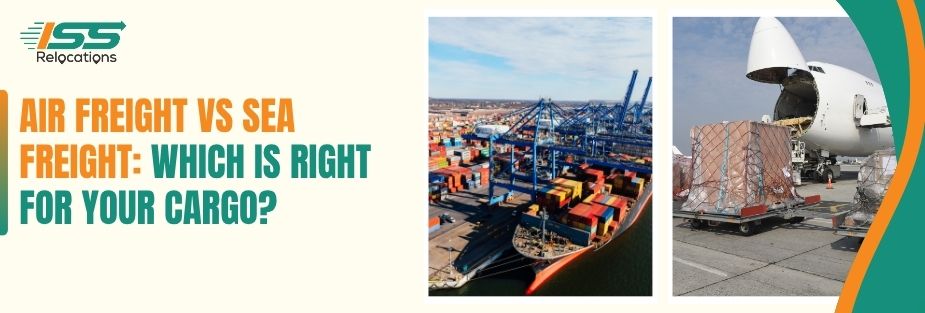
Air Freight vs Sea Freight: Which Shipping Option Is Right for Your Cargo?
Air freight vs sea freight is a decision most shippers face when they need to balance delivery urgency, transport cost, cargo characteristics, and destination requirements.
The lowest transport quote may not be the lowest overall cost if a delayed shipment causes a production stoppage, missed launch, empty shelves, or an expensive replacement order.
The right choice depends on the shipment rather than a universal rule. This guide compares air cargo services and sea freight forwarding services, explains the costs and risks that are often overlooked, and shows how international freight forwarding services can help you select a practical route.
Air Freight Vs Sea Freight: The Core Difference
Air freight moves cargo through an airport network, while sea freight moves it between ports, usually with inland transport at the origin and destination.
Air transport is normally considered when time, shipment control, or cargo value matters most. Sea transport is often evaluated when the shipment is larger, heavier, less urgent, or more sensitive to the main freight rate.
In an air freight vs sea freight comparison, the important point is that the quoted transport price tells only part of the story. Airport or port handling, collection, delivery, customs preparation, cargo dimensions, packing requirements, storage, and the cost of delay all affect the decision.
When Air Freight Is Usually Considered
Air freight is commonly suitable for compact shipments that need to move quickly or have a high commercial value relative to their size.
Examples may include urgent spare parts, product samples, medical or technical equipment subject to applicable requirements, seasonal merchandise, documents or components needed for a project, and replacement stock after an unexpected shortage.
In an air freight vs sea freight comparison, air freight forwarding services can also be useful when a shipment is too important to wait for the next practical sea sailing.
A manufacturer waiting for one small component may lose more through halted production than through a higher air freight charge. Similarly, a retailer launching a time-sensitive product may place a premium on availability rather than on the lowest transport cost.
For an air freight vs sea freight decision, air freight does not remove the need for careful preparation. Incorrect cargo descriptions, incomplete commercial documents, unsuitable packaging, restricted items, or unclear consignee information can still cause delays. Airport handling and security requirements may also affect how cargo is packed and accepted.
When Sea Freight Is Usually Considered
In an air freight vs sea freight comparison, sea freight is often considered for furniture, machinery, commercial inventory, project cargo, household goods, and other shipments where volume or weight makes air transport commercially unattractive.
It can be a practical option when the delivery date allows for port handling, customs processing, and inland delivery after arrival.
Sea freight forwarding services may involve full container load shipments, consolidated cargo, or another shipment arrangement selected according to the cargo and route. The correct option depends on the shipment’s volume, packing method, origin, destination, schedule, and handling needs.
In an air freight vs sea freight comparison, sea transport requires more forward planning than many first-time shippers expect.
A cargo cut-off, documentation deadline, vessel schedule, transhipment arrangement, port process, or destination delivery appointment can affect the overall movement. Schedules are not guarantees, so a sensible plan includes time for operational and authority-related variables.
Plan Your Freight Shipment
Share your cargo details, deadline, origin, and destination to assess practical air or sea freight options around your shipment needs and priorities.
How Cost, Transit Time, and Cargo Type Change the Decision
When comparing air freight vs sea freight, a useful comparison starts with the business or personal outcome you need, not simply with the air or sea rate.
We have seen customers focus on a lower freight quote and then discover that storage, extra handling, urgent local purchases, or a missed project milestone changed the economics of the move.
Comparing the Total Landed Cost
With air freight vs sea freight, air freight is generally priced around the chargeable weight, which may reflect either the actual weight or the shipment’s volumetric weight, depending on which is higher under the applicable calculation.
A large but lightweight shipment can therefore cost more than its scale weight initially suggests.
Sea freight is often assessed around container capacity, shipment volume, weight, equipment, consolidation, and the route selected. However, the main ocean freight amount is not the complete cost.
A comparison may also need to account for collection, export handling, documentation, terminal or port charges, customs-related preparation, destination handling, delivery, storage, insurance considerations, and any special packing.
With air freight vs sea freight, the cost of waiting matters as well. Ask what happens if the cargo arrives late. Could a production line stop? Would a customer order be cancelled?
Would staff need to remain in temporary accommodation? Would the shipment require expensive local replacement purchases? These questions do not automatically make air freight the correct choice, but they help reveal the real financial risk.
Matching the Method to the Cargo
Cargo suitability is as important as speed. Fragile items, valuable equipment, temperature-sensitive goods, dangerous goods, batteries, oversized pieces, and regulated products may have additional acceptance, packing, labelling, or documentation requirements. The requirements can vary according to the commodity, origin, destination, carrier, and applicable authority.
For an air freight vs sea freight decision, for example, a small critical machine part may be a strong air freight candidate, while a complete production line may require sea transport because of its dimensions and weight.
A family relocating internationally may choose air for essential clothing and personal items while sending furniture and non-urgent household effects by sea. A business may send samples by air and replenish regular inventory by sea.
Before accepting a quote, provide accurate information about:
- The commodity, quantity, value, dimensions, and gross weight
- The collection address, delivery address, deadline, and consignee details
- Any batteries, liquids, food, medicines, fragile items, machinery, or restricted goods
This allows a forwarder to assess the shipment more realistically and identify information gaps before booking.
Compare Air and Sea Freight
Get a focused review covering transit time, cargo type, landed costs, documentation, handling, and delivery requirements for your international route.
What Should You Check Before Choosing a Freight Option?
When comparing air freight vs sea freight, the best shipping method becomes clearer when you convert a general question into a shipment-specific assessment. A reliable plan should connect the cargo, the deadline, the documents, the route, and the final delivery requirement rather than treating freight as only a transport booking.
Questions That Clarify the Right Shipping Mode
In an air freight vs sea freight comparison, start with the delivery objective. Is the cargo needed on a fixed date, or is the date flexible?
Is the deadline linked to a product launch, a construction phase, an employee’s arrival, a household move, or routine stock replenishment? What is the consequence if the shipment arrives later than planned?
For an air freight vs sea freight decision, next, examine the cargo itself. Is it compact and high-value, bulky and heavy, fragile, temperature-sensitive, oversized, or subject to special handling?
Can the goods be packed into standard transport units, or will they need crating, pallets, lifting equipment, or a tailored loading plan?
Then review the route. Confirm the collection location, port or airport options, destination address, inland delivery requirements, customs responsibilities, and whether the shipment will be consolidated or move as a dedicated load. Requirements may differ between countries and between commercial cargo, personal effects, and specialised goods.
For an air freight vs sea freight decision, finally, consider your tolerance for uncertainty. Sea freight may provide a lower transport cost for a suitable shipment, but it requires scheduling around sailing dates and port processes.
Air freight may reduce the transport window, but a higher cost does not guarantee that customs, consignee readiness, or final-mile delivery will happen immediately.
Why Documentation and Packaging Matter
A forwarder can help prepare and coordinate shipment information, but the shipper remains responsible for providing accurate details and supporting documents.
Depending on the shipment, this may include commercial invoices, packing lists, certificates, permits, origin information, or other records requested by the carrier or authorities. The exact requirements must be checked for the commodity and route.
When comparing air freight vs sea freight, a vague description such as “parts” or “equipment” may not give the carrier or authorities enough information. Descriptions should accurately identify what is being shipped. Values, quantities, country of origin, consignee details, and package counts should also be consistent across the available documents.
When comparing air freight vs sea freight, packing decisions affect both modes. Air cargo may need packaging that keeps dimensions and weight efficient while protecting items during handling.
Sea cargo may need protection against movement, stacking, humidity, and a longer handling chain. Specialist or fragile goods may require professional packing, crating, moisture protection, or a packing assessment.
Do not assume that customs clearance, import approval, duty treatment, or delivery timing is automatic. These can depend on the destination, cargo classification, documents, and decisions by the relevant authorities. Confirm the responsibilities and expected process before the shipment is collected.
Our moving experts are here to assist you.
How Freight Forwarding Services Reduce Shipment Risk
For an air freight vs sea freight decision, international freight forwarding is most valuable when several moving parts must work together. The service is not simply about finding a transport rate.
It can involve understanding the cargo, comparing feasible routes, coordinating collection and main carriage, checking shipment information, communicating milestones, and arranging the next transport leg.
At ISS Relocations, our freight forwarding approach begins with the shipment details and the outcome you need. A useful assessment should consider the cargo type, dimensions, weight, value, origin, destination, timing, packing, documentation, and final delivery requirement.
This creates a more meaningful comparison between air cargo services and sea options than comparing two headline prices without the surrounding costs.
Coordinating the Complete Journey
With air freight vs sea freight, a shipment may involve collection from a warehouse, packing or palletisation, export preparation, airport or port handling, the main transport leg, destination handling, customs-related coordination, and delivery to the final address. The exact services depend on the shipment and route.
A forwarder can also help identify practical issues early. For example, a delivery address may not have suitable access for a large vehicle, a consignee may not be ready when cargo is released, or an item may require documentation that was not included at the quotation stage.
Finding these issues before collection is usually easier than resolving them after the cargo is already moving.
When comparing air freight vs sea freight, ISS Relocations supports customers with planning and coordination for international shipments where freight forwarding is relevant.
Our team can help customers organise the information needed to evaluate air freight forwarding services or sea freight options, while customs and government authorities retain responsibility for their own approvals, inspections, and decisions.
When a Hybrid or Split Shipment Makes Sense
In an air freight vs sea freight comparison, choosing between air and sea does not always have to be an all-or-nothing decision. A split shipment may be sensible when part of the cargo is urgently required and the remainder is bulky or less time-sensitive.
A company could send essential tools or launch samples by air while moving replenishment inventory by sea. A relocating family might send immediate necessities by air and household effects by sea.
With air freight vs sea freight, the trade-off is additional coordination. Separate shipments can mean more packing, documentation, handling, tracking, delivery arrangements, and opportunities for mismatch between arrival dates.
The combined cost may also exceed the cost of choosing one mode. A split plan works best when the operational benefit is clear and the urgent portion is carefully defined.
Before proceeding, compare the complete plan: the price of each movement, the cost of preparing two shipments, the importance of the early cargo, the destination arrangements, and the consequences if one part is delayed. A shipment-specific review is more reliable than assuming that a hybrid solution is automatically more flexible.
Wrapping Up
The right answer in the air freight vs sea freight decision depends on five practical factors: how soon the cargo is needed, what it weighs and measures, how it must be handled, what the complete landed cost will be, and what risks arise if delivery is delayed.
Air freight may suit urgent, compact, valuable, or time-sensitive cargo. Sea freight may be more appropriate for larger, heavier, or less urgent shipments where planning time is available. In some cases, splitting the cargo provides a useful balance, but only when the additional coordination is worthwhile.
When comparing air freight vs sea freight, before booking, prepare an accurate cargo description, dimensions, weights, value, packing details, origin, destination, deadline, and consignee information.
Ask for the full route and cost structure, clarify documentation responsibilities, and verify destination requirements because customs, import procedures, charges, and handling rules vary by country and shipment type.
ISS Relocations can help you assess the practical options through international freight forwarding services, shipment planning, coordination, and related moving support. Requesting a shipment-specific review with complete cargo details is the most reliable next step toward choosing a transport method with fewer surprises.


- International Relocation
- Office Movers and Corporate Relocations
- Storage Services
- Mobility Services
- Pet Relocation
- Transit Insurance
- Local Moving Services
- Automobile Shipping
- Freight Forwarding
- Handyman Services
- Customs Clearance Services
- Records Management
- Hotel Fit Outs
- Third Party Logistics Services
- Bulk Cargo Services
- Baggage Services
"*" indicates required fields
FAQs - Air Freight vs Sea Freight
Is air freight faster than sea freight?
Air freight usually provides a shorter main transport time than sea freight, but customs, handling, collection and final delivery still affect the total journey. No transit time should be treated as guaranteed.
Is air freight more expensive than sea freight?
Air freight is often more expensive for bulky or heavy cargo because pricing considers chargeable weight. Sea freight may cost less for suitable larger shipments, but port, handling, delivery and storage charges must also be compared.
When should I choose air freight for my cargo?
Consider air freight for compact, urgent, high-value or time-sensitive cargo, such as critical spare parts or product samples. Compare the higher freight cost with the commercial or personal consequences of delay.
When is sea freight the better option?
With air freight vs sea freight, sea freight is often considered for heavier, larger or non-urgent cargo when there is time for sailing schedules, port handling, customs processing and inland delivery. Suitability depends on the route, cargo and destination requirements.
Can I split one shipment between air freight and sea freight?
For an air freight vs sea freight decision, yes, a split shipment can send urgent essentials by air and less time-sensitive cargo by sea. It creates extra packing, documentation, handling and delivery coordination, so the combined benefit and cost should be assessed first.
What documents are needed for international freight forwarding?
Documents vary by cargo, origin and destination, but may include a commercial invoice, packing list, shipment details, origin information and permits where applicable. Accurate descriptions and values are essential, and authorities may request more.
How can ISS Relocations help with air or sea freight?
ISS Relocations can help assess shipment details, compare practical transport options, coordinate freight movements and organise related services. Customs and government authorities remain responsible for approvals, inspections and final decisions.
Moving Company - Recent Blog
Stay informed and prepared for your next move with our latest blogs on moving services in the UAE. From expert packing tips to international relocation guides, ISS Relocations brings you up-to-date insights to make your moving experience smoother, safer, and stress-free.


Our Membership & Affiliation